MERCEDES-BENZ | LEAD FORMS
Streamlining the Mercedes-Benz Vehicle Purchase Experience
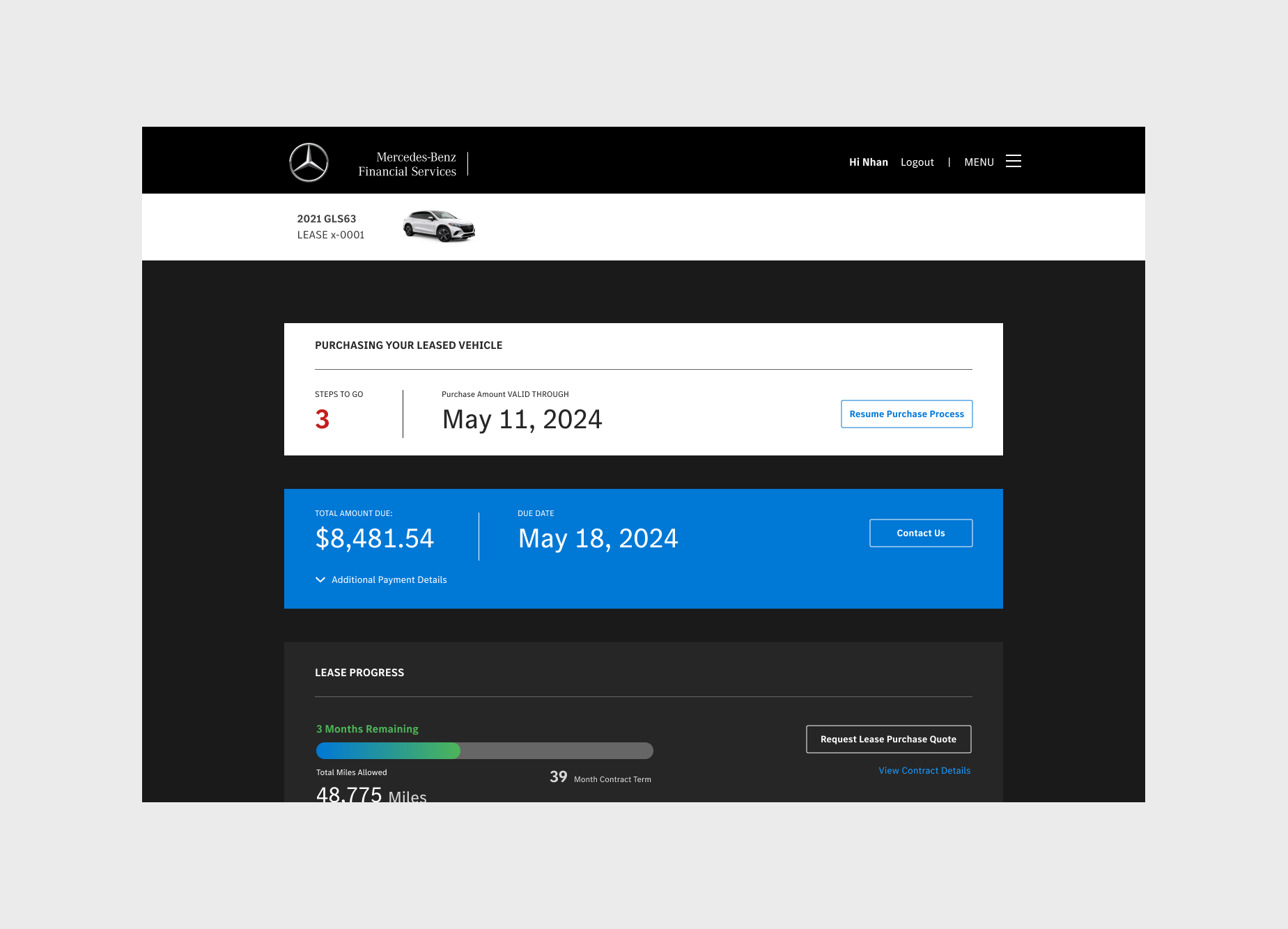
Mercedes-Benz Financial Services customers were managing a multi-state title and purchase process through a two-tab document system and an email message center — with no clear indication of where they were, what was missing, or what came next. I led UX from discovery through delivery, replacing that fragmented experience with a guided stepper that gave customers a single source of truth for documents, status, and next steps.
My Role
- Owned the full design process: journey audit → wireframes → prototype → stakeholder sign-off
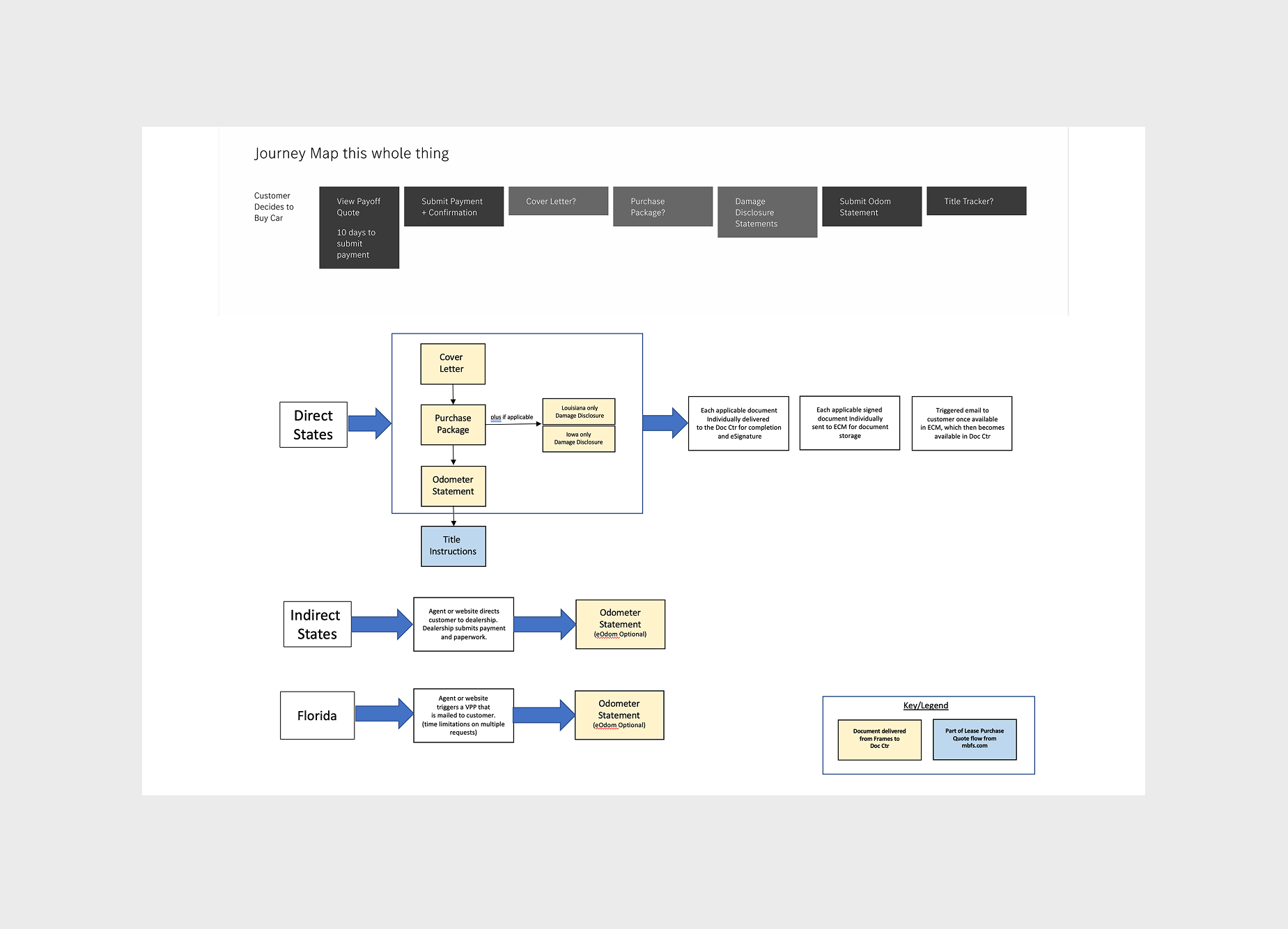
- Mapped the existing flow across 4+ states to identify where customers were losing track of documents and progress
- Aligned product, engineering, and legal on a single flow that worked across state-level regulatory variations
- Designed and iterated the stepper UI in Figma, validating clarity of status indicators with real users
The ProblemUsers lacked clarity on where they were in the vehicle purchase and title process, leading to confusion and drop-off.
The experience varied significantly by state due to different legal requirements, resulting in inconsistent expectations and increased support calls.
Discovery 🔍
To understand the complexity of the title and purchase process, I mapped the end-to-end journey across state-specific flows and validated through stakeholder interviews. The journey map image below highlights variations in approval flows and title processing across states.
- Users did not have a clear mental model of the process or their current status
- State-specific variations created inconsistent and unpredictable experiences
- Approval steps lacked transparency, leading to uncertainty and support calls
- Internal teams had misaligned understanding of the actual user journey
Define 🧠
Problem Framing
How might we create a clear, consistent experience that adapts to state-specific requirements while reducing user confusion?
Success Metrics
- Reduced support inquiries related to title status
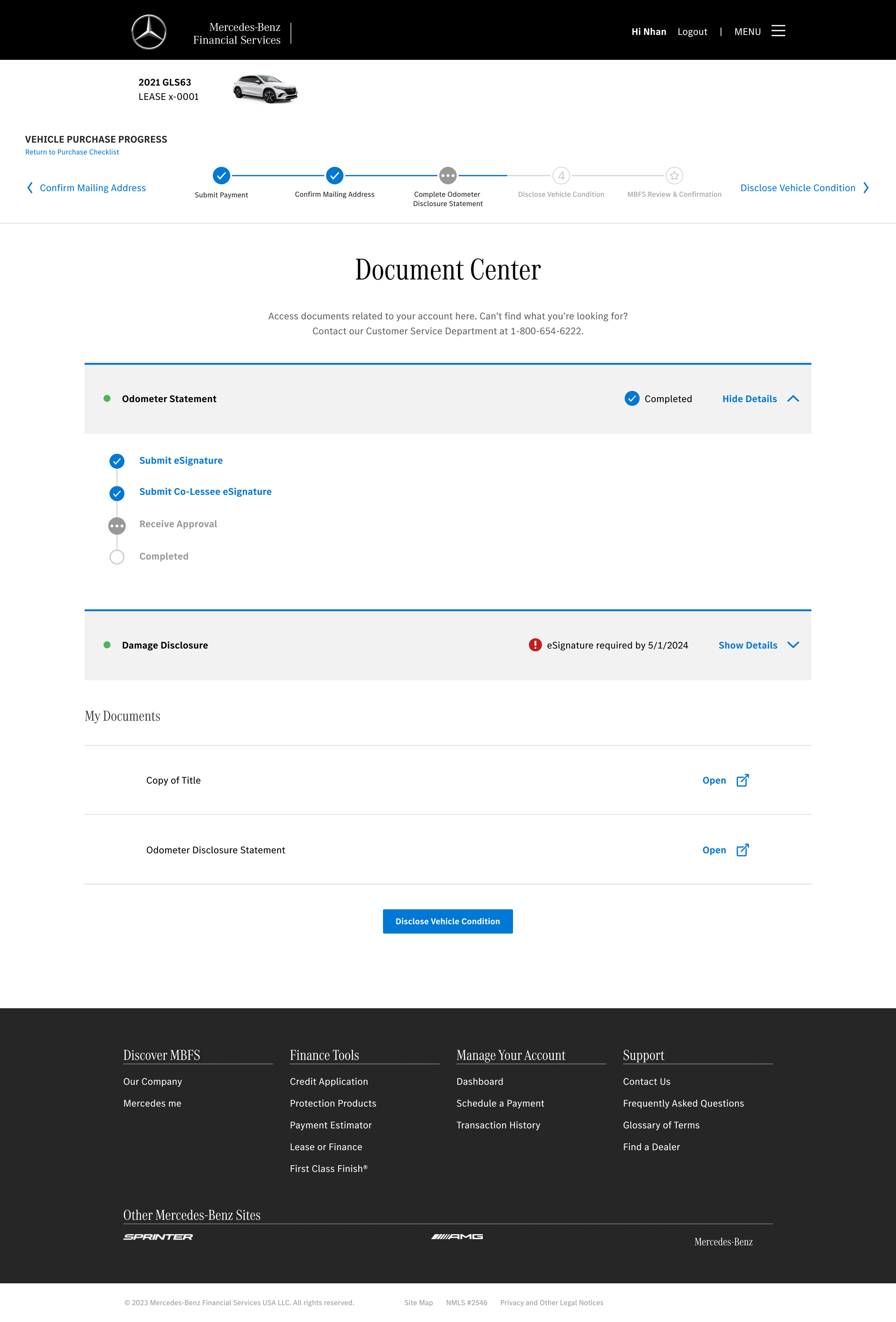
- Reduced ambiguity in a complex multi-state flow by consolidating document tracking and status updates into a single guided experience.
- Stakeholder feedback confirmed the redesign addressed the core pain points identified in discovery.
Design ✏️
Approach
I explored multiple flow directions to simplify the experience while accounting for state variability, focusing on improving clarity, transparency, and user confidence.
Iterations
- Started with simplified linear flows → evolved into conditional flows based on state requirements
- Introduced clearer status indicators and step visibility
- Refined information hierarchy to reduce cognitive load
Key Decisions
- Prioritized transparency over minimalism to ensure users understood their status
- Designed flexible components to handle state-specific variations
- Balanced system constraints with user clarity
Validate 🧪
Validation
- Prioritized transparency over minimalism to ensure users understood their status
- Designed flexible components to handle state-specific variations
- Balanced system constraints with user clarity
What Changed
- Simplified language and labeling for better comprehension
- Adjusted flow visibility based on confusion points
- Improved status indicators to reduce ambiguity
Impact
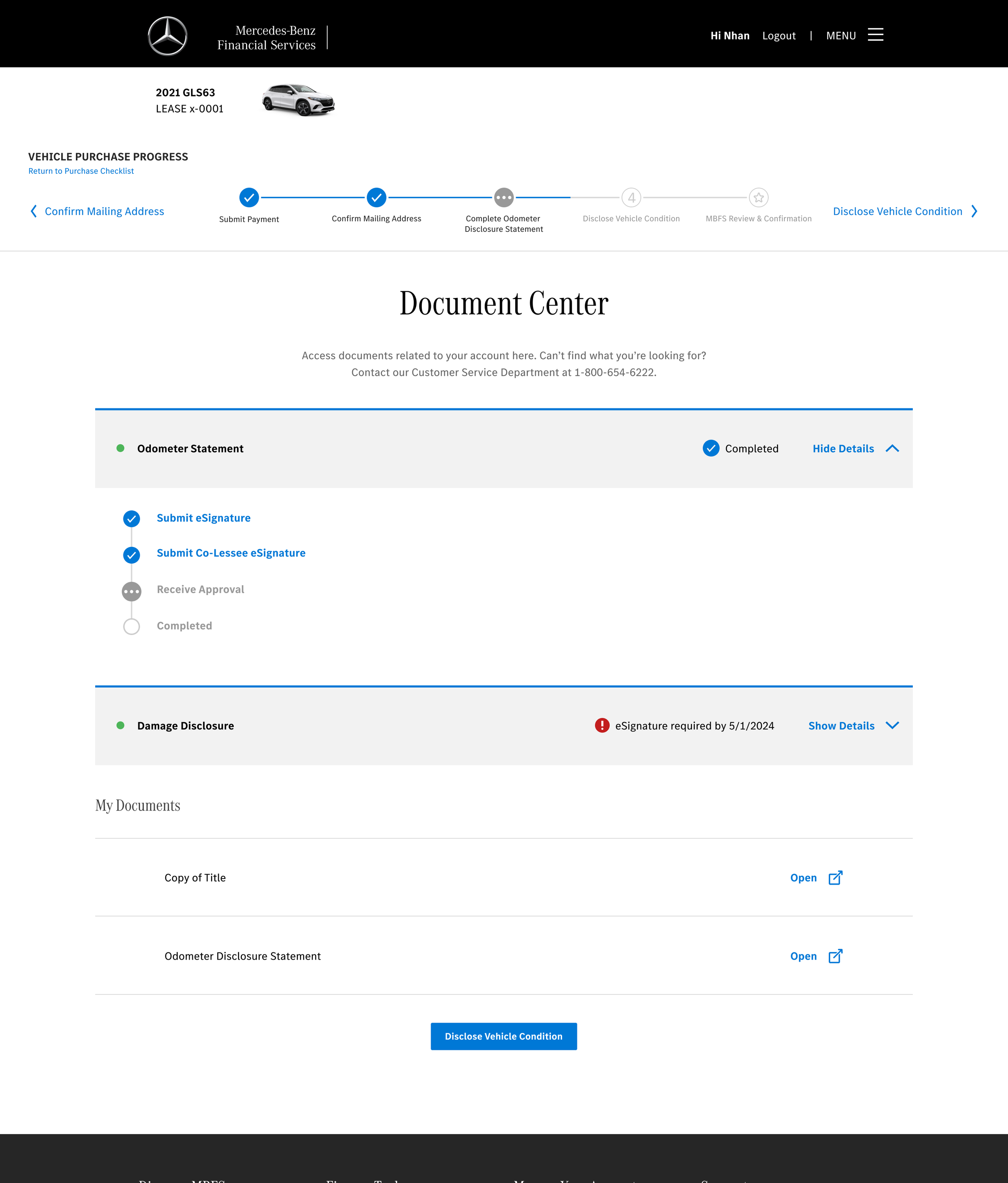
Customers went from managing their purchase across two disconnected tabs and an inbox to a single guided experience. One place for every document, every status, every next step.
Created a scalable title-tracking framework that improved transparency for users, reduced ambiguity in complex state-specific workflows, and aligned internal teams around a clearer end-to-end journey.
Customers went from juggling two disconnected tabs and an inbox to a single guided experience. One place for every document, every status, every next step.